Homeowners: Avoid a Panel Upgrade, 3 Fixes for Fuse Box and EV Charger
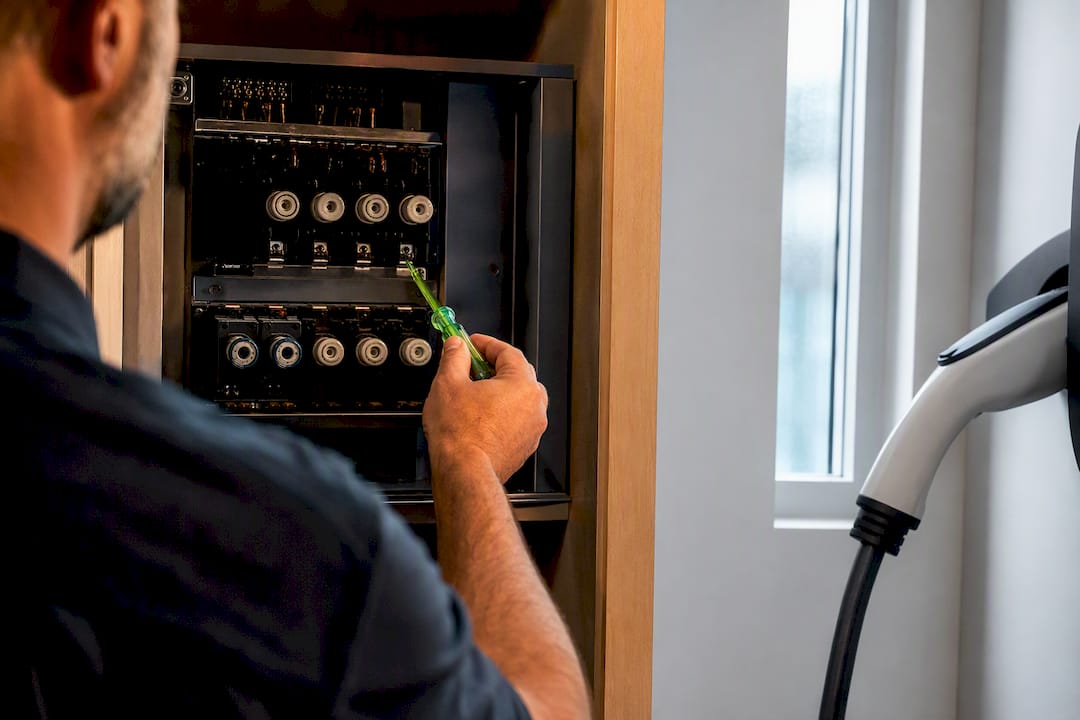
Yes, most home Level 2 chargers run on a dedicated 240V circuit wired straight from your consumer unit. If you’re weighing a purchase, the next move is simple: book a site assessment or snap a few photos of your panel for a quote.
TL;DR:
- Most home Level 2 chargers require a dedicated 240V circuit with proper breaker sizing based on continuous load calculations, typically 40A to 60A.
- Long cable runs increase voltage drop, necessitating larger gauge wiring and careful planning to avoid overloads and trips.
- Older panels with rewirable fuses or no spare spaces often need upgrading, but a proper load calculation can sometimes avoid a full replacement.
- Installing an EV energy management system or a small sub-panel can delay or eliminate the need for a costly main panel upgrade.
- A certified electrician must ensure appropriate protection, including GFCI or RCBO devices and surge protection, with proper documentation for safety and compliance.
Table of Contents
- Fuse box and EV charger: how the connection actually works
- How is breaker size calculated for an EV charger?
- When does a fuse box need a full upgrade?
- Can you avoid a panel upgrade entirely?
- What protection does an EV charging circuit need?
- What happens on installation day?
- Why do EV charger breakers keep tripping?
- How EV Install Pro approaches fuse box and EV charger installs
- Ready to get a quote for your EV charger install?
- Sources
Fuse box and EV charger: how the connection actually works
Your EV charger links to the consumer unit through one of two setups: a plug-in unit fed by a NEMA 14-50 receptacle, or a hardwired charger connected directly to a dedicated circuit. Both routes need the same protective chain between the panel and the charger.
A licensed electrician typically installs:
- A dedicated breaker sized to the charger’s draw
- A local isolator switch for safe shutoff during service
- GFCI or RCBO protection to catch ground faults before they become dangerous
Cable routing matters more than most homeowners expect. Longer runs from panel to garage or driveway increase voltage drop, which can force a jump to a heavier gauge wire even at the same amperage. Some installers skip running a branch circuit through your main panel altogether and instead fit a small dedicated EV consumer unit near the charging point, bundling the breaker, RCBO, and surge protection into one tidy, purpose-built enclosure. It’s a cleaner solution when the main panel is already crowded.
How is breaker size calculated for an EV charger?
Every EV charging session counts as a continuous load, which changes the math.
Two examples installers see constantly:
- A 32A charger needs a breaker sized according to continuous load rules, typically larger than the charger’s amperage.
- A 48A charger needs a 60A breaker, following the 125% rule for continuous loads
Quick reference: a 48A Level 2 charger typically pairs with #6 AWG copper wire and a 60A breaker, while a 32A unit pairs with #8 AWG copper and a 40A breaker, according to the EV charger calculator from IntrySys.
Aluminum wiring needs upsizing versus copper at the same rating, and long runs push conductor size up further to control voltage drop, a detail confirmed by wiring workflows that map panel-to-charger routes. Plug-in units generally rely on GFCI protection built into the receptacle or breaker, while hardwired chargers need dedicated ground-fault protection specified at install. Voltage drop becomes a real concern on long cable runs, and installers measure distance to determine appropriate wire gauge, which is exactly why your electrician measures the distance before quoting wire gauge.
When does a fuse box need a full upgrade?
Some panels simply can’t take on an EV charger safely, no matter how the circuit is designed. A few warning signs point straight to a panel upgrade conversation:
- Old rewirable or ceramic fuses instead of modern breakers, with no RCD or RCBO protection anywhere on the board
- No spare ways left in the panel, plus signs of double-tapped breakers or visible scorching around terminals
- Undersized service: 100A or 150A service can get tight once you add a 40 to 60A continuous EV load on top of existing household demand, while 200A service often has sufficient room, but a proper load calculation is necessary to confirm.
That load calculation, formally called a maximum-demand assessment, is what your electrician actually runs. It’s not a guess based on panel slot count. They pull your meter history, tally connected loads, and determine real headroom. Homeowners often assume a full panel equals no room, but a proper load calculation is the correct test, and it sometimes clears a busy-looking board for EV charging without touching the main panel. When an upgrade is genuinely needed, the fix is usually a sub-panel, a full panel replacement, or in rarer cases, coordinating a service upgrade with your utility, which adds its own timeline and fees.
Can you avoid a panel upgrade entirely?
Three practical workarounds let many homeowners skip a costly panel replacement, and installers reach for them constantly.
- EV energy management systems (EVEMS) use CT clamps on your main feed to monitor whole-home demand in real time, throttling charger output automatically when the dryer, stove, or AC kick in, letting you avoid a full panel upgrade while still charging safely overnight
- A dedicated sub-panel or small EV consumer unit near the charger location isolates the new load without disturbing your main board
- Down-rating the charger to 16 to 20A instead of a full 40 or 48A unit still delivers solid overnight range for most daily driving, at a fraction of the wiring and breaker cost
Pro Tip: If you’re planning to add a second EV or a heat pump in the next few years, mention it at quote stage. An EVEMS setup installed now can often be reconfigured later, saving you from ripping out wiring twice.
The trade-off is speed versus cost: a down-rated charger takes longer to fill a depleted battery, and an EVEMS unit occasionally slows charging during peak household demand. For most single-EV households, either option beats the price and disruption of a full panel swap.
What protection does an EV charging circuit need?
A fuse or breaker alone doesn’t make a circuit safe. GFCI or RCBO protection (sometimes called RCD in older terminology) is required because EV charging circuits carry sustained current for hours at a time, and a ground fault during that window needs to trip fast. Plug-in units often rely on RCD protection built into the receptacle circuit, while hardwired chargers need it specified directly in the install. Outdoor or exposed installations benefit from Type 2 surge protection too, guarding the charger’s electronics against voltage spikes from the grid.
Protective-device selection has to account for the entire chain, not just the breaker rating on paper. As specialists in fuse protection note, a worn holder or mismatched upstream equipment can cause nuisance trips or overheating even when every rating looks correct on a spec sheet.
Before your installer leaves, confirm:
- Circuit labelling at the panel matches the charger
- RCD/RCBO type is documented on your installation certificate
- Any surge protection device (SPD) is visible and accessible
- You’ve received written documentation, not just a verbal rundown
What happens on installation day?
Your electrician’s first move is a site survey, and it shapes everything that follows.
- Photograph and assess the panel, note the main breaker rating, and measure the cable route to your parking spot
- Confirm charger amperage based on your vehicle and daily driving needs, then match wire gauge and breaker size accordingly
- Pull the required permit and schedule inspection; a licensed electrician typically handles this paperwork on your behalf
- Complete the install and issue documentation, including an electrical certificate, itemized invoice, and permit reference number
Timing varies widely. A straightforward hardwire job with existing panel capacity often wraps up in a few hours. Adding board tidying or a partial upgrade extends that to a full day, and a full panel replacement with utility coordination can stretch into weeks once scheduling and inspection windows are factored in.
Why do EV charger breakers keep tripping?
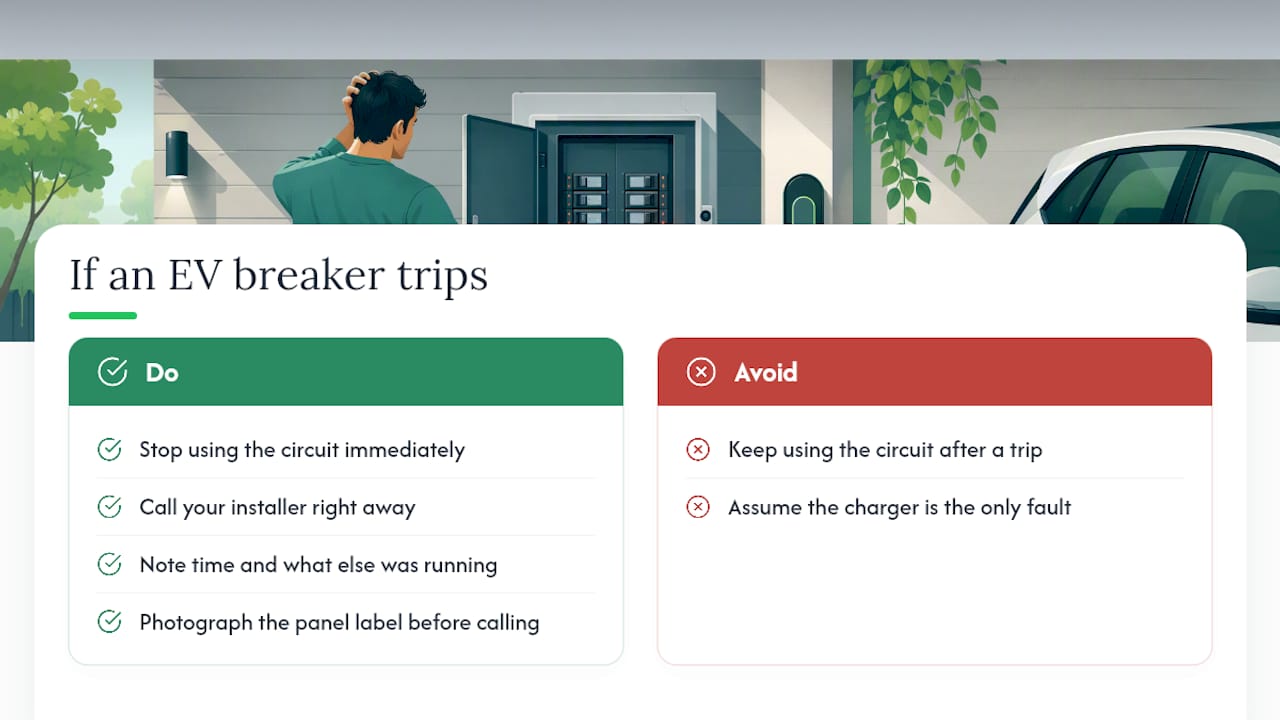
Repeated trips almost always point to overload, a loose terminal connection, or a fuse holder rated incorrectly for the charger’s draw. A tripped breaker paired with visible scorching, a burning smell, or a warm panel cover means stop using the circuit and call your installer immediately. Note the time of the trip, what else was running in the house, and take a photo of the panel label before you call. Repeated trips are rarely a “faulty charger” problem on their own. They usually signal a wiring or panel issue that needs a licensed electrician’s inspection.
How EV Install Pro approaches fuse box and EV charger installs
A licensed electrician works on fuse box and EV charger connections to meet standards like correct breaker sizing, proper RCD protection, and a permit trail you can produce if you sell the home. Pricing details and permit handling vary; homeowners booking an install should have their panel accessible and their preferred charger model ready to discuss, to speed up both the quote and the on-site work.
— Hafiz
Ready to get a quote for your EV charger install?
EV Install Pro is the straightforward alternative to piecing together quotes from separate electricians, permit offices, and rebate paperwork yourself. Before you request an estimate, grab a photo of your panel label, note your main breaker rating, and decide roughly what charger amperage you’re after. That’s all our team needs to start pricing the job accurately.

Pricing starts from $1,800, permits and inspection are handled at no extra charge, and same-week booking is available across Metro Vancouver. If your electrician determines you need something beyond a standard hardwire, whether that’s an EVEMS setup or a full panel conversation, it gets folded into the same quote rather than a separate call-out. Use the EV charger installation cost calculator to get a free estimate based on your panel and charger details, and have your documentation ready to go from quote to completed install in one visit.
Sources
Recommended
Get Your Free Installation Quote
Free assessment · Technical Safety BC permit included · Same-week availability across Metro Vancouver